The reality is that most SUVs in this country never see a hint of dirt or mud. They do the school run, they do the Coles run, they sit in the driveway looking tall. Which begs the question: why isn't the station wagon the default? A favourite across Europe, wagons offer the same practicality (often more) in a body that handles better, sits lower, drives sharper, and uses less fuel doing it.
They tick more boxes than almost any other car on sale, yet rarely get a look in on Australian roads. Three of the DMARGE team own one, and we'd hate to see them disappear. Especially now. The M5 Touring is back after more than a decade. The M3 Touring just finished fifth outright at the Nürburgring 24 Hours. Audi has retired the RS4 Avant and renamed it the RS5 Avant. Alpina is sending off its independent era with the B3 GT Touring. The fast wagon is having its biggest moment since the early 2000s, and most buyers are still shopping for an X5.
Here's our updated list of the best station wagons you can buy in Australia right now, from the bonkers to the genuinely sensible.
In this best station wagon guide...Audi RS 5 AvantGenesis G70 Shooting BrakeBMW M3 Competition TouringPorsche Taycan 4 CrossTurismoŠkoda Octavia RS WagonPeugeot 508 SportswagonBMW M5 TouringAudi RS6 Avant GTAlpina B3 GT TouringMercedes-AMG E53 S EstateCupra Leon SportstourerAudi A5 Avant e-hybrid Audi RS 5 Avant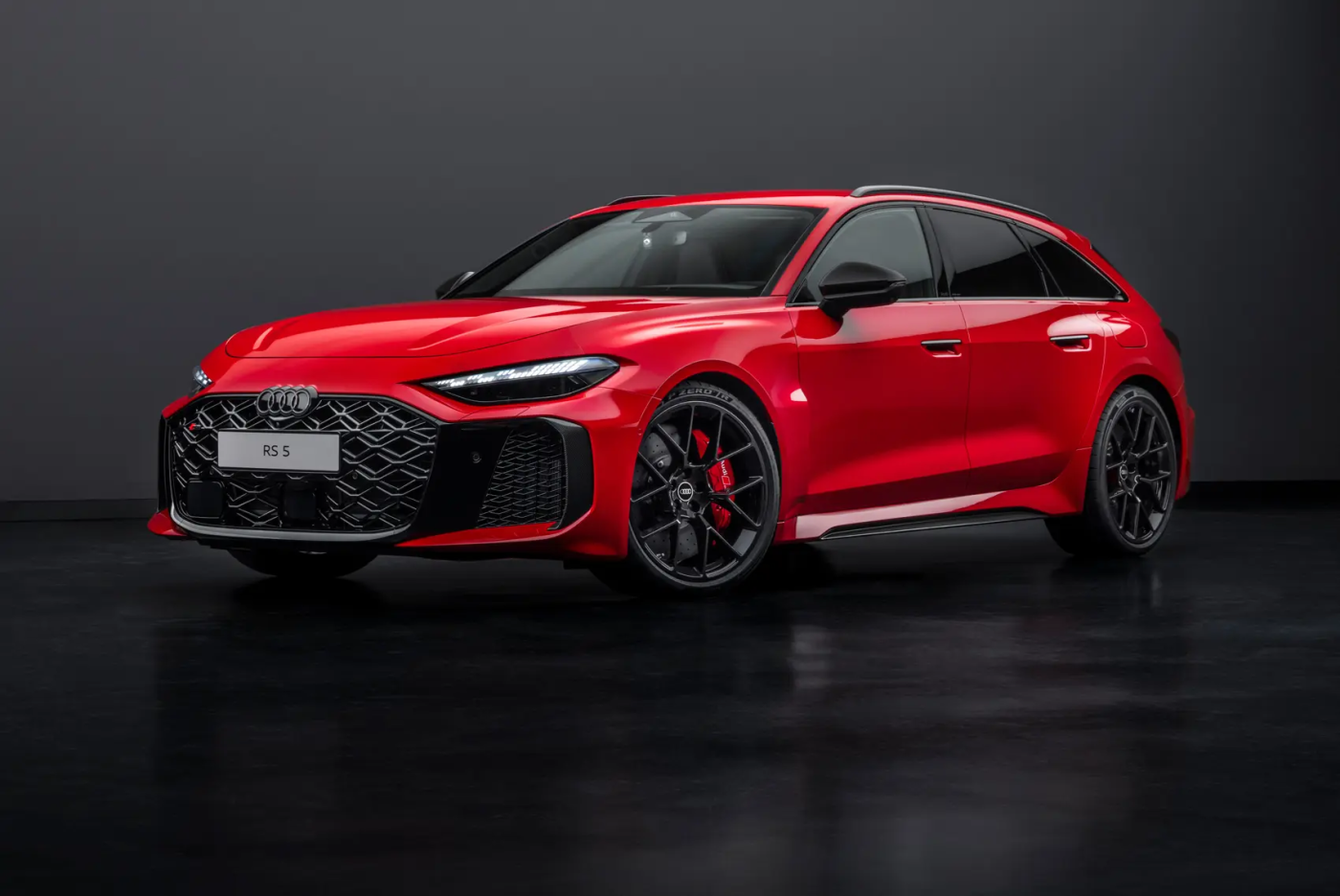
Fuel Economy: 3.9 L/100km (PHEV combined claim) Cargo Space: 361 litres (60:40 split fold) Price: From AU $182,900 before on-roads (arriving second half of 2026)
I need to be upfront here, because the RS5 Avant is doing two jobs at once. It's a new car, and it's also a replacement. The RS4 Avant that I own and have loved for years is gone. In its place, Audi has merged the A4 and A5 lines, and what used to be the RS4 Avant is now called the RS5 Avant. Same brief, new name, completely new powertrain.
And the powertrain is the headline. The new RS5 is Audi Sport's first plug-in hybrid. There's still a twin-turbo 2.9-litre V6, but it now works with a 130kW electric motor and a 25.9kWh battery for a combined 470kW and 825Nm. That's 139kW more than the old RS4 Avant made, and it's enough to drag this thing to 100km/h in 3.6 seconds despite weighing 2,370kg. Yes, you read that right. The new RS5 Avant weighs almost as much as a LandCruiser Prado.
Audi has worked hard to hide the weight. There's a world-first electromechanical torque vectoring rear transaxle that can shuffle up to 2,000Nm between the rear wheels in 15 milliseconds, twin-valve adaptive dampers, and a clever battery management system that keeps a 90 percent charge ready whenever you flick it into RS Sport mode so the electric motor is always there to mask the kilos. There's also a new drifty "RS Torque Rear" mode, which is exactly what it sounds like.
The trade-off, and there's always a trade-off, is in the back. The PHEV battery sits where the floor used to be, which means the Avant gets a fairly modest 361 litres of boot space with the seats up. That's less than an A3. A lot less than the old RS4 Avant. The seats do fold 40:20:40 so you'll fit your bikes and your boards, but for the first time in this nameplate's history, the wagon isn't winning the practicality argument by a country mile.
Inside, it's recognisably new-generation Audi: OLED screens, RS-specific seats in proper leather, physical scroll wheels back on the steering wheel after the haptic experiment didn't go down well. There's a 10-second boost button on the wheel for when you want to use all 470kW at once.
Is it better than the RS4 Avant it replaces? On paper, comfortably. In the soul department, I'll reserve judgment until I've driven one. The old RS4 had a naturally aspirated V8 once and a hard-charging twin-turbo V6 most recently, and it was always a car you drove with your right foot first. The new RS5 Avant is a calculator with a wagon body. A very, very fast calculator.
Pros
The fast Audi wagon nameplate lives, just under a new badge. 78km of electric range means you can do the school run without burning a drop.Cons
2,370kg. That is a number you cannot un-see. Boot space has gone backwards, badly. Discover the Audi RS 5 Avant Genesis G70 Shooting Brake Genesis GV70 Shooting Brake
Fuel Economy: 9.0 L/100kmCargo Space: 465 - 1200 litresPrice: $79,000 before on-road costs
Genesis is on a mission to offer Australian carbuyers an alternative when looking for something luxurious and practical. The South Korean manufacturer already has the wonderfully-equipped GV80 SUV and, while it doesn't necessarily best its rivals when it comes to price, it at least justifies it much easier.
The same can be said of the Genesis GV70 Shooting Brake. To be honest, we'd pay whatever the asking price if our decision was based purely on looks, this is an incredibly attractive car. Genesis has taken the GV70 sedan and elongated it at the back to offer that little bit extra in terms of practicality, yet still keeping the overall profile one that is easy to manouvere around town.
The one main downside to the GV70 shooting brake is that, for some reason, Genesis has decided to not offer the rather potent twin-turbo V6 from its sedan sibling, as an engine option. The GV70 shooting brake will only be offered with a 2.0-litre turbocharged unit producing 179kW. And, with regards to price, it's on par with its German equivalents, but Genesis does give you a much longer list of included equipment in return.
While space may be a little limited for those in the back due to the sloping roofline, the driver and passenger are enveloped in pure luxury. As for the drive, it probably won't rival the likes of Audi or BMW, and is geared more towards comfort than outright fun. If the main bulk of your driving is spent on motorways, the Genesis GV70 shooting brake is a perfect car for you.
Discover the Genesis GV70 Shooting Brake BMW M3 Competition Touring
Fuel Economy: 10.3 L/100kmCargo Space: 500 – 1,510 litresPrice: TBC
It feels like a long time coming, but we can finally say the BMW M3 Touring is on its way to Australia, and we couldn't be more excited. A superfast BMW wagon is something many motorists have been pining for and finally the Munich-based manufacturer has answered our prayers.
While actual driving performance has yet to be formally tested, the numbers of the BMW M3 Competition Touring make for impressive reading. The 3.0-litre turbocharged flat six produces 375kW/650Nm of power, enough to propel it to 100km/h from a standstill in 3.6-seconds, just 0.1-seconds longer than the M3 sedan.
This is a fast wagon, make no mistake. So fast, in fact, that is now holds the record for the fastest lap time around the notorious Nürburgring by a whopping 10-seconds. This has been helped by the number of 'M' branded packages installed, including M suspension, M servotronic steering and M compound brakes. Whilen this may be technical jargon to most, what it means in the real world is that the M3 Touring isn't just fast in a straight line, but it can more than hold its own in the corners.
And of course, being a wagon, it's practical too. So you can easily chuck the kids and some luggage in the back and speed off to your holiday destination in record time. We'll have to wait until it finally arrive on Australian shores to be sure, but we're pretty confident the BMW M3 Competition Touring could be the perfect car.
Pros
Finally, the M car we've been waiting for. Good looking, stonker of an engine, practical.Cons
Divisive front grille design. The Competition-only spec means you'll need to bring your driving A-game. Discover the BMW M3 Competition Touring Porsche Taycan 4 CrossTurismo Porsche Taycan 4 CrossTurismo
Range: Up to 479km/291 milesCargo Space: 446 – 1,212 litresPrice: From AU $198,330 Drive Away
The Porsche Taycan CrossTurismo could also feature on our list of best electric cars, being a fully battery-powered wagon, but as it makes as much of a case for being a practical daily driver, it earns a spot on this list instead.
As with other Porsche models, the Taycan CrossTurismo is available in multiple trim levels: 4, 4S and Turbo (which doesn't actually have a turbocharger) and for the purposes of this summary, we're looking at the Base model.
Make no mistake, the base model is hardly a slouch. The 280kW max power (350 with overboost) will send you to 100km/h in a smidge over 5-seconds which we appreciate isn't exactly supercar speed by today's standards, but we can't imagine many people will be complaining. Of course, anyone buying an electric car will be mostly interested in the range, and Porsche's claim of 291 miles/469km is pretty competitive. The best part about the Taycan is that it offers up to 270kW DC superfast charging, if you can find a station that supports it, of course. Do so though, and you can recharge your Taycan CrossTurismo in around 25-minutes.
You do get a generous amount of equipment as standard, but it wouldn't be Porsche without an extensive and expensive list of optional extras. But, if you've got the money to buy a Porsche in the first place, we don't think this will be a concern.
As for the drive, the Taycan 4 CrossTurismo is almost identical to the Panamera (which is essentially a ICE-powered CrossTurismo). It's an incredible experience and one that really does make a strong case for electric vehicles being just as good as, if not better than their combustion engine counterparts. It's quick (very quick), handles well into corners and is also comfortable around town. The perfect daily driver? It's definitely up there.
Pros
One of the best-handling large cars on the market. Porsche reliability and refinement is second to none.Cons
Rear space is limited. Superfast charging infrastructure still not quite good enough. Discover the Porsche Taycan CrossTurismo Škoda Octavia RS Wagon Škoda Octavia RS Wagon
Fuel Economy: 6.8 L/100kmCargo Space: 600 – 1,555 litresPrice: From AU $57,790 Drive Away
Škoda, while being part of the Volkswagen Group, used to be seen as the runt of the pack. That is certainly no longer the case, as the Czech carmaker is now easily on par with its German cousins (along with Spanish brand SEAT), offering quality builds, plentiful features and technologies and great styling to boot. It also has a very hot station wagon up its sleeves: the Octavia RS.
Škoda's RS cars are revered for their outright performance, especially when you consider the low price you pay for the car itself. It's very much an 'if you know, you know' vibe. The Octavia RS' 2.0-litre turbocharged engine is the same unit that's found in the Golf R, albeit slightly less powerful (the Octavia station wagon is also longer, heavier and wider than the Golf R wagon).
In recent years, Škoda has shown more of a tendency to diverge from the Volkswagen Group's cookie-cutter approach and step out on its own a bit more. This is evident in the Octavia's interior design, which is far more tech and feature-heavy than its siblings. Oh yeah, and you get an umbrella in the door as you do with a Rolls-Royce. Neat, hey?
Pros
A cheaper, practical Golf R Wagon. Looks awesome, especially with those five-spoke rims.Cons
Where's the manual? Škoda brand doesn't have the same cache as VW... Depreciation will probably sting. Discover the Mazda6 Atenza Peugeot 508 Sportswagon Peugeot 508 Sportswagon
Fuel Economy: 6.3 L/100kmCargo Space: 530 – 1,780 litresPrice: From AU $71,004 Drive Away
French automaker Peugeot is one that has undergone a dramatic image shift in recent years. What was once seen as perhaps more of a budget brand now comfortably holds its own against the biggest names in the game. With improvements in all areas including design, ride quality and features offered as standard, Peugeot is not one to be overlooked anymore.
The 508 Sportswagon is a prime example of why. If it's cargo space you're after, it's virtually unchallenged, with nearly 1,800-litres of space on offer when the rear seats are folded. A 165kW engine provides enough power to get up to – and cruise at – highway speeds (this isn't a performance station wagon, remember) and with Nappa leather, roof bars and an impressive sound system from fellow French brand Focal to pump tunes around the cabin, you definitely get your money's worth.
Make no mistake, this is a good looking and cool car, too. Frameless doors mean the roofline can be lowered to give it a much sportier guise, and mean it won't look out of place when pulling up outside the fanciest of inner-city hotspots.
Pros
Zippy and full of flair. More reliable than the Gallic reputation might suggest.Cons
Hard to justify the price. Limited dealer/service network can be a hassle. Discover the Peugeot 508 Sportswagon BMW M5 Touring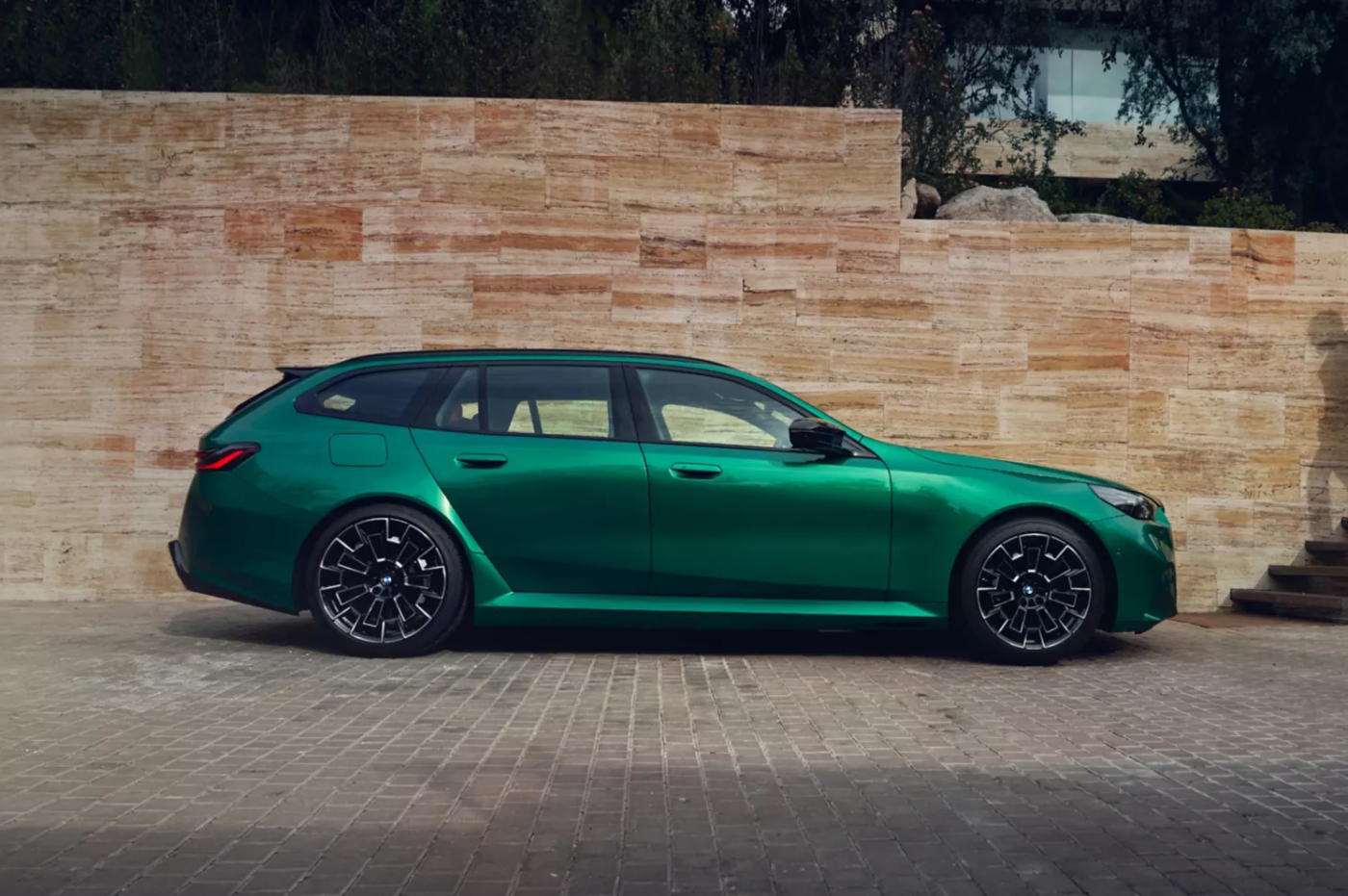
Fuel Economy: 1.7 L/100km (PHEV claimed) Cargo Space: 500 to 1,630 litres Price: From AU $266,900 before on-roads
The M5 Touring is back. After more than a decade away (the last one was the E61, and before that the V10-powered E61), BMW has finally given us a proper M5 wagon again. And they didn't half do it.
Under the bonnet sits a twin-turbo 4.4-litre V8 paired to a plug-in hybrid system, good for 535kW and a frankly unhinged 1,000Nm. That's enough to launch a 2,550kg wagon to 100km/h in 3.6 seconds and on to 305km/h. Yes, it's heavy. It weighs about the same as a LandCruiser 300. No, it doesn't matter, because the way it moves is borderline witchcraft.
The interior is properly M, with the red M1 and M2 buttons, an 18-speaker Bowers & Wilkins system, and seats that actually hold you in place when you decide to lean on it. The 500-litre boot expands to 1,630 with the seats down, so you can absolutely fit the golf clubs, the kids, and a guilty conscience.
Is it overkill? Hand on heart, yes. Is it brilliant? Also yes. The M3 Touring is the smarter buy. The M5 Touring is the one you want anyway.
Pros
V8 still lives, and it lives well. Properly fast, properly practical, properly mental.Cons
2.5 tonnes is a lot of car. $266,900 before on-roads is a lot of money. Discover the BMW M5 Touring Audi RS6 Avant GT
Fuel Economy: 11.7 L/100km Cargo Space: 548 to 1,658 litres Price: From AU $399,000 before on-roads (sold out)
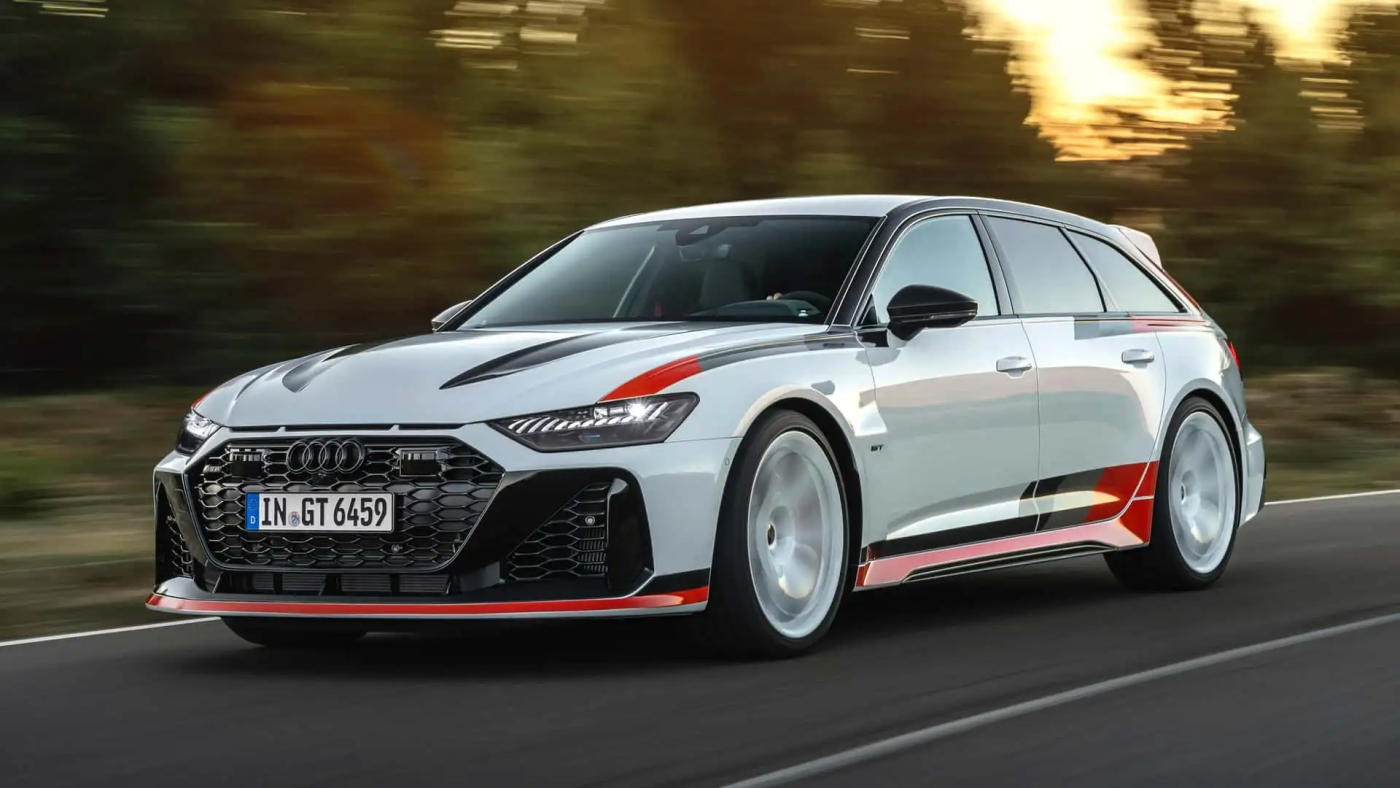
If the regular RS6 Avant is the wagon for people who get it, the RS6 Avant GT is the wagon for people who really get it. And, more importantly, for people who got their order in early, because only 22 came to Australia and every single one was spoken for before the press release went out.
Power is unchanged from the RS6 Performance: 463kW and 850Nm from the twin-turbo 4.0-litre V8, 0-100 in 3.3 seconds, top speed 305km/h. What you're paying the extra $150,000 for is the look, the rarity, and the engineering. Manually adjustable coilover suspension. A retuned quattro sport diff with more rear bias in Dynamic. A carbon bonnet, carbon front fenders, and 22-inch white forged wheels styled on the 1989 Audi 90 Quattro IMSA GTO race car.
The graphics will not be for everyone. C'mon mate, they're enormous. But the RS6 GT isn't trying to be subtle. It's the last hurrah for the combustion RS6 before electrification swallows everything, and Audi wanted to send it off shouting.
For most people, the regular RS6 Performance does 90 percent of this for $150k less. For the 22 Australians who bought one of these, that wasn't the point.
Pros
A genuine collector car, badge and all. The last properly bonkers V8 RS6.Cons
$399,000 before on-roads. Sold out. Not coming back. Alpina B3 GT Touring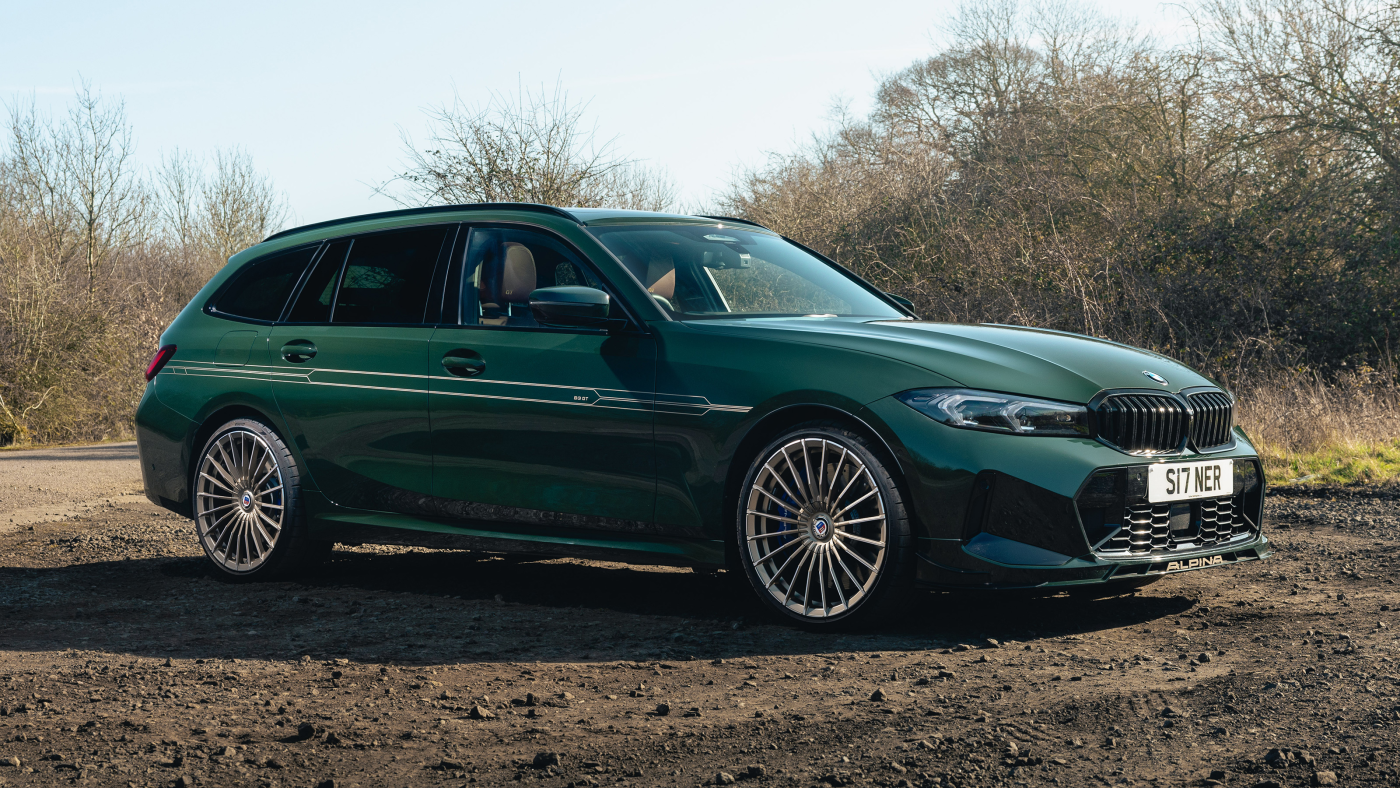
Fuel Economy: 10.5 L/100km Cargo Space: 500 to 1,510 litres Price: From AU $184,900 before on-roads
Here's a question no one asks at dinner parties: what if the M3 Touring is actually the wrong fast 3 Series wagon to buy? Because the Alpina B3 GT Touring exists, and on paper it has the M3 Comp Touring beaten.
Same B58 inline-six base. Alpina has worked it over to make 389kW and 730Nm, which is 14kW and 80Nm more than the M3 Competition Touring. xDrive, ZF eight-speed, 0-100 in the high threes. The GT spec, which is essentially the swansong before BMW fully absorbs Alpina, adds a stiffer chassis through new bracing, a beefier rear stabiliser, retuned variable steering, and forged 20-inch Oro Tecnico wheels that look like nothing else on the road.
What you're really paying for, though, is the Alpina-ness. The interior is a hand-stitched riot of Lavalina leather with Oro Tecnico contrast piping. The exterior is subtle in a way only Alpina does subtle, with the splitter, canards, and rear diffuser doing the talking while the rest of the car pretends to be a 3 Series. People who know, will know. Everyone else will just see a really nice BMW wagon and move on with their day.
It's also the last of its kind. Alpina has been quietly running independently for decades, but BMW bought the company and the standalone Alpina brand as we know it is winding down. The B3 GT is the last hurrah from Buchloe before the badge becomes a BMW sub-brand. That alone makes it interesting. The fact that it's faster, more comfortable, and arguably better resolved than the M3 Comp Touring makes it borderline essential for anyone who actually wants to use a fast wagon every day.
The M3 Touring will get more attention. The Alpina is the one the people in the know will be quietly buying.
Pros
More power than the M3 Comp Touring for similar money. The last properly independent Alpina. Future collectible.Cons
Subtle to the point of invisible. Not for show-offs. 500-litre boot is the same as the M3 Touring, but the M5 Touring matches it. Mercedes-AMG E53 S Estate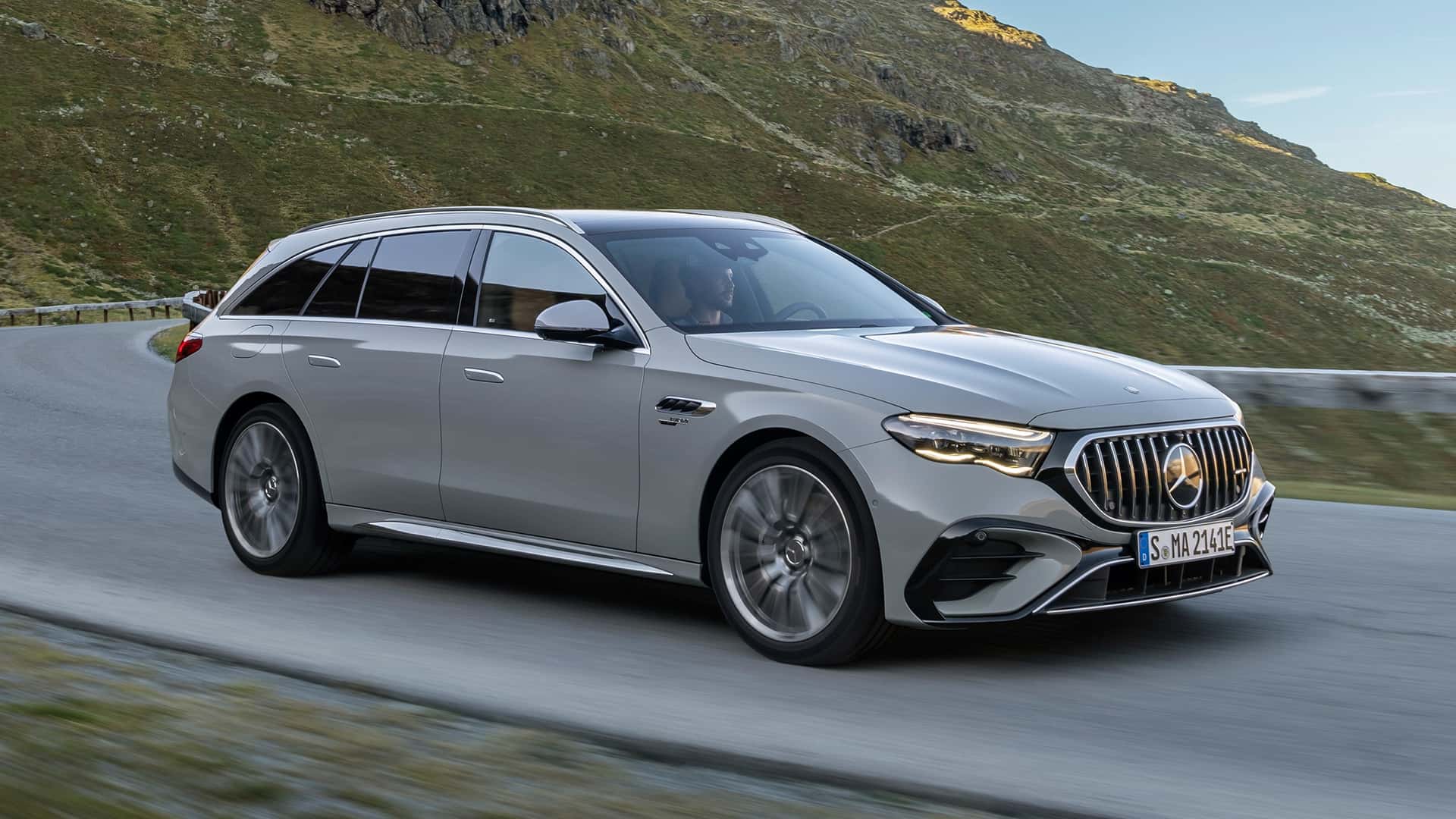
Fuel Economy: 1.2 L/100km (PHEV claimed) Cargo Space: 615 litres (estimated, seats up) Price: Not confirmed for Australia
A few months ago I wrote a piece about Mercedes pulling out of the wagon business, citing the German Head of Exterior Design who basically said the volumes weren't there. Then AMG quietly went and built one anyway. Of course they did.
The 2026 E53 Hybrid Estate is the replacement for the W213 E63 S Estate, and it represents a generational shift in what AMG thinks a fast wagon should be. Gone is the hand-built 4.0-litre twin-turbo V8 with 450kW and the soundtrack that could wake a postcode. In its place sits a 3.0-litre turbocharged inline-six paired to a 161hp electric motor and a 28.6kWh battery, for a combined 430kW (577hp) standard or 450kW (604hp) on Race Start overboost. 0-100 in around 3.8 seconds. 41 miles of EV-only range. AMG Performance 4Matic+ with a rear-biased setup that can decouple the front axle for pure rear-drive operation.
On paper, it's an excellent car. Rear-wheel steering that turns the back axle up to 2.5 degrees for sharper turn-in. AMG Ride Control adaptive suspension. Burmester audio. Seven drive modes including a proper Battery Hold setting so you can save the EV range for the city. The boot still works as a boot because the battery sits low in the floor, and the 40:20:40 rear bench means surfboards, golf clubs, the dog, whatever you need.
There's just one problem for Australian buyers: this car isn't coming here. At least not yet. The E53 Hybrid sold locally is the 2.0-litre four-cylinder plug-in hybrid sedan at $206,900 before on-roads in Dark Carbon spec. The inline-six Estate is, for now, confirmed for the US market only. Mercedes-Benz Australia hasn't said yes, and hasn't said never. If you want one, you'll be either waiting, writing strongly worded letters, or chasing a grey import.
Which is the real story of the AMG E53 Estate. The car exists. It's good. And once again, Australia is the country that misses out on the wagon. Tell us we're wrong, Mercedes.
Pros
The first hybrid AMG wagon, and it's not embarrassing. 41 miles of EV range means you can actually be sensible in it.Cons
Not officially coming to Australia. Sedan only down here. V8 is dead. The straight-six sounds good, but it's not the same. Cupra Leon Sportstourer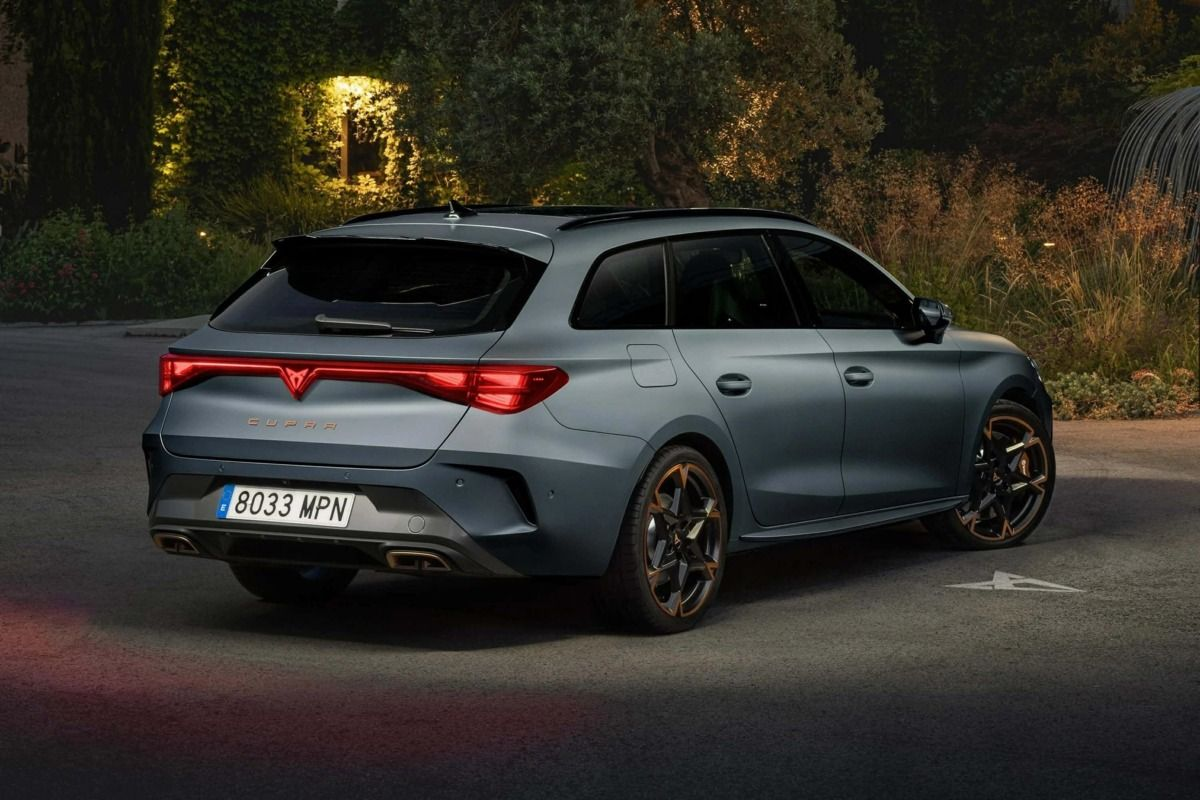
Fuel Economy: 0.4 L/100km (claimed, PHEV) Cargo Space: 470 to 1,450 litres Price: From AU $69,990 before on-roads (VZe), VZx from mid-2026
This is the wagon I didn't think we'd be writing about. Cupra has been the Volkswagen Group's quietly-getting-on-with-it Spanish side project for a few years now, and the Leon Sportstourer is its first proper station wagon in Australia. It's also the only PHEV wagon you can buy under $100k in Australia, which feels like it should be a bigger deal than the market is making of it.
The current VZe variant runs a 1.5-litre turbo four, a single electric motor, and a 25.8kWh battery for a combined 200kW and 400Nm. That's not M3 Touring money, obviously, but for the segment it's plenty. The really interesting number is the 121km of WLTP electric range. That means most people doing a normal Sydney commute will essentially never see a petrol bowser. The claimed 0.4L/100km combined is, frankly, nonsense, but real-world testers are getting around 2.5L/100km when they plug it in. Even on a flat battery it sits around 6L/100km.
The hot one, the Cupra Leon Sportstourer VZx, lands mid-2026. That's where the story gets properly fun. 2.0-litre turbo four, 245kW and 420Nm, all-wheel drive, 0-100 in a claimed 4.8 seconds. Same powertrain as the Golf R. In a wagon. For somewhere between $65k and $75k. That's M3 Comp Touring performance for under half the money, in a body that costs nothing to insure and disappears into a Coles carpark.
Inside, it's recognisably Volkswagen Group with extra spice. Copper accents on the wheels, badges, and dash stitching. CUPBucket sports seats in the Extreme Package. A 12-speaker Sennheiser stereo, which is a nicer brand than you'd expect at this price. The boot is 470 litres with the rear seats up. That's actually smaller than a Skoda Octavia RS wagon because the PHEV battery eats into the floor, but it's still more useful than just about any SUV at the same price.
If you want a fast wagon and you don't want to spend $187k on the M3 Touring, this is the only car on the list that gets close to the brief on a sensible budget. Especially the VZx version, when it lands.
Pros
VZe is the cheapest PHEV wagon in Australia by a country mile. VZx (mid-2026) brings Golf R power to a wagon body.Cons
VZe boot smaller than the Octavia RS because of the PHEV battery. No proper torque-vectoring diff up front, so it understeers if you push it. Discover the Cupra Sportstourer Audi A5 Avant e-hybrid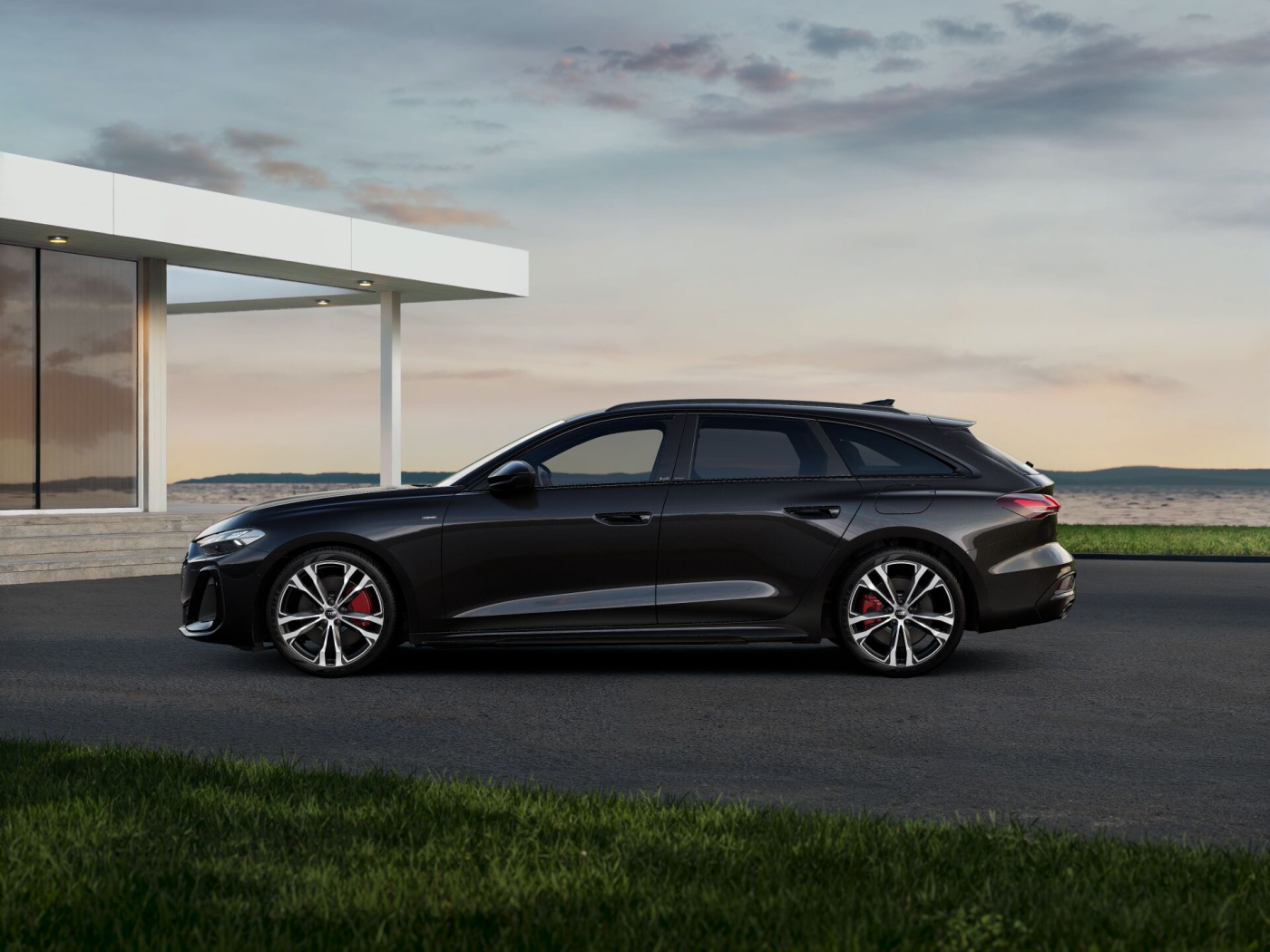
Fuel Economy: 1.0 L/100km (PHEV claimed) Cargo Space: 361 to 1,306 litres Price: From AU $92,900 before on-roads
Two things are happening here that deserve attention. The first is that Audi has built a proper plug-in hybrid wagon. The second, and this is the bit that genuinely surprised me, is that Audi has priced it at exactly the same money as the petrol A5 Avant TFSI quattro 200kW. No PHEV premium. Same price, more power, 87km of electric range thrown in. That doesn't happen.
I'm actually considering buying one that's how good they are.
The A5 Avant e-hybrid runs a 2.0-litre turbo petrol four (essentially the Golf GTI engine) paired with a 105kW electric motor and a 20.7kWh usable battery. Combined output is 270kW and 500Nm, which is exactly what the S5 Avant V6 makes. Read that again. The PHEV version of the A5 has S5 power numbers, except it'll also do 87 to 97km on electrons alone before the petrol engine even wakes up. 0-100 in 5.1 seconds. Quattro all-wheel drive. Seven-speed dual clutch.
For an Eastern Suburbs Sydney commute, this is dangerously close to ideal. Most of my driving sits comfortably under 80km a day. Plug it in once or twice a week, fill it up with petrol roughly never, and on the weekend you've got an S5's worth of power for when you actually want to use it. Audi quotes 1.0L/100km combined. Real-world Australian testing is putting it closer to 7.6L/100km once the battery dies, which is still excellent for a 2.2-tonne wagon with 270kW.
The trade-offs are honest ones. The 25.9kWh battery sits under the boot floor, which knocks luggage capacity back to 361 litres with the seats up. That's barely more than a Golf, and noticeably less than the petrol A5 Avant. Boot space is the thing wagons exist to deliver, so this stings. The other catch is that you have to plug it in. If you don't, you're hauling around a heavy battery for no reason and the fuel economy gets distinctly average.
For the right buyer, though, this is one of the most quietly smart wagons on sale right now. Same price as the petrol. More power than the petrol. Genuine EV-only commuting. Just don't be lazy about the wall socket.
Pros
S5-matching power for A5 money. Audi is essentially giving the PHEV system away. 87 to 97km of real EV range means most weeks you won't see a bowser.Cons
Boot drops to 361 litres because of the battery. That's wagon heresy. 2.2 tonnes. You can feel every kilo when you push it hard. Discover the Audi A5 Avant e-hybridRead the full article The Best Station Wagons You Can Buy In Australia… And A Couple You Can’t on DMARGE. Don’t miss it!


0 Commentaires