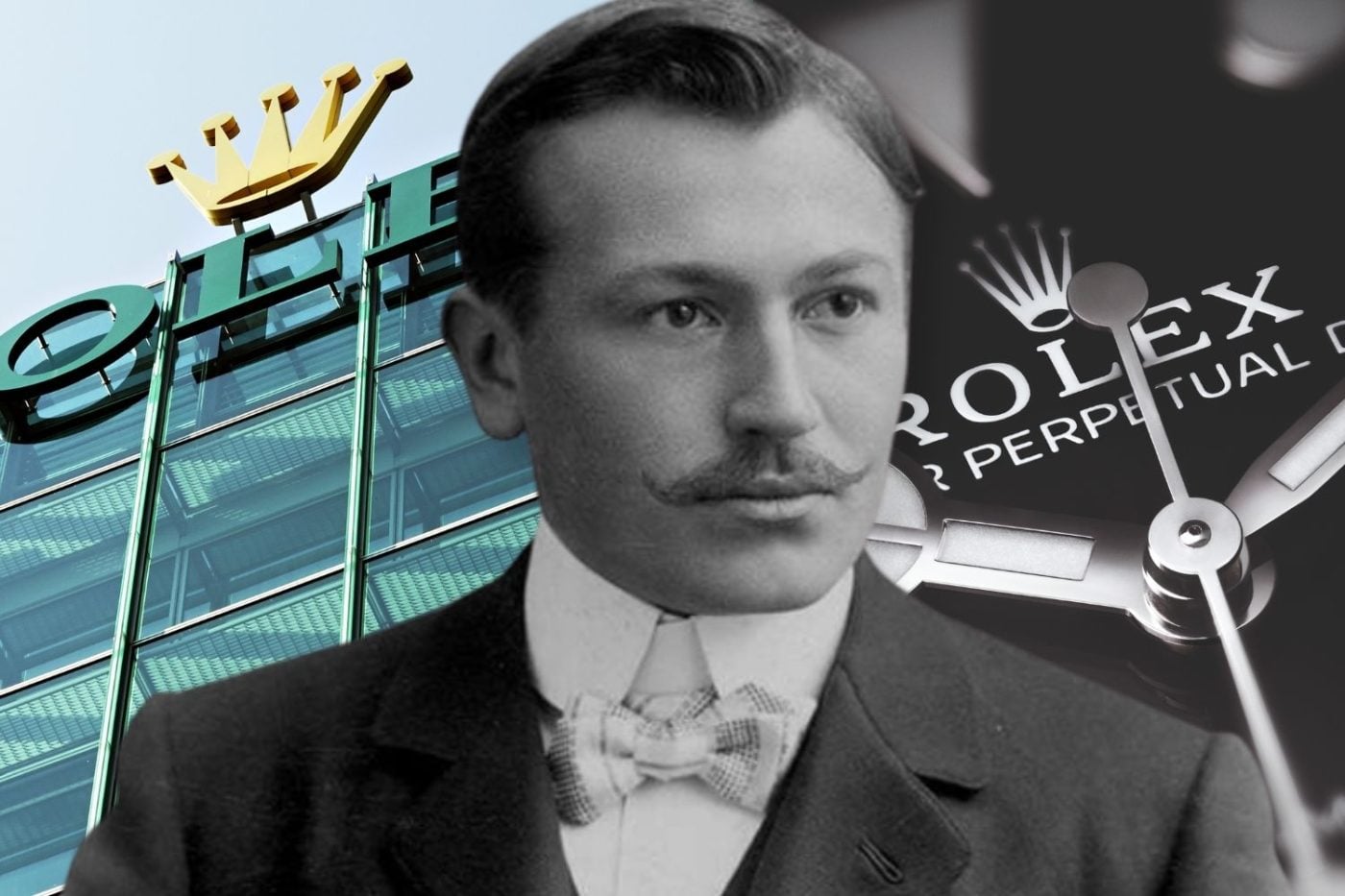
Let me start with something that still catches people off guard every time I mention it at dinner parties: Rolex, the single most recognisable luxury brand on the planet, is owned by a charitable trust. Not a billionaire family. Not a publicly traded conglomerate. Not some private equity mob in a glass tower. A charity.
Hand on heart, when I first found out about this I thought someone was having me on.
The company that makes the Daytona, a watch that routinely sells for two, three, sometimes ten times its retail price, is technically a non-profit organisation. And the story of how it got there is one of the strangest, most fascinating tales in the entire luxury industry.
It Starts With a Bloke Who Wasn't Even Called Rolex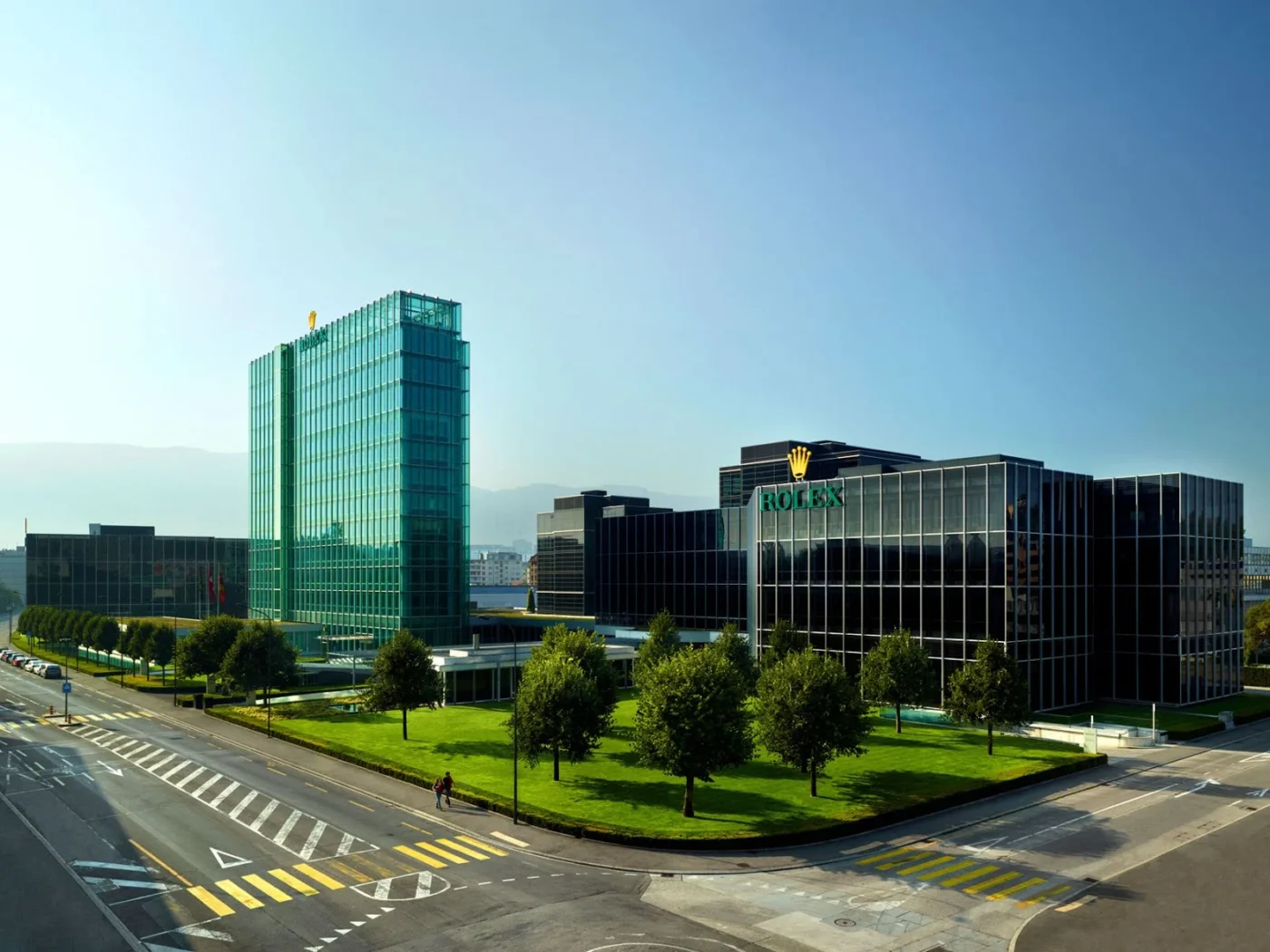
The whole thing begins with Hans Wilsdorf, a German-born orphan who moved to London in 1903 and started importing Swiss watch movements. He was in his early twenties, already sharp as a tack, and he had this radical idea that wristwatches (which at the time were considered a bit of a novelty, something women wore) could replace pocket watches for men.
In 1905, he co-founded Wilsdorf and Davis with his brother-in-law, Alfred Davis. The name was about as exciting as a tax return, and Wilsdorf knew it. He wanted something short, easy to pronounce in any language, and that looked good printed on a watch dial. He reportedly went through hundreds of letter combinations before landing on "Rolex" in 1908. There's no deep meaning behind it. He just liked the way it sounded. Sometimes the best brand names come from someone sitting on a train mumbling syllables to themselves.
By 1919, Wilsdorf had relocated the company to Geneva, partly because of the Swiss watchmaking ecosystem and partly because Britain had imposed heavy import duties on watch cases during World War I.
From Geneva, he built Rolex into a powerhouse of technical innovation. The Oyster case in 1926 gave the world its first truly waterproof wristwatch. The Perpetual rotor, introduced in 1931, introduced the self-winding mechanism that's still the backbone of mechanical watches today. The Datejust in 1945 was the first watch to automatically display the date on the dial.
Wilsdorf wasn't just a watchmaker. He was a marketing genius decades before the term existed. He strapped a Rolex to a woman named Mercedes Gleitze who swam the English Channel. He put them on the wrists of mountaineers heading for Everest. He understood, long before anyone else in the watch industry, that a watch wasn't just a tool. It was a story you wore on your wrist.
The Death That Changed EverythingHere's the thing about Hans Wilsdorf: he was driven, obsessive, brilliant, but also deeply private and, by many accounts, increasingly lonely in his later years.
His wife, Florence May Wilsdorf-Crotty, died in 1944. They had no children. And this is where the Rolex story takes its unusual turn.
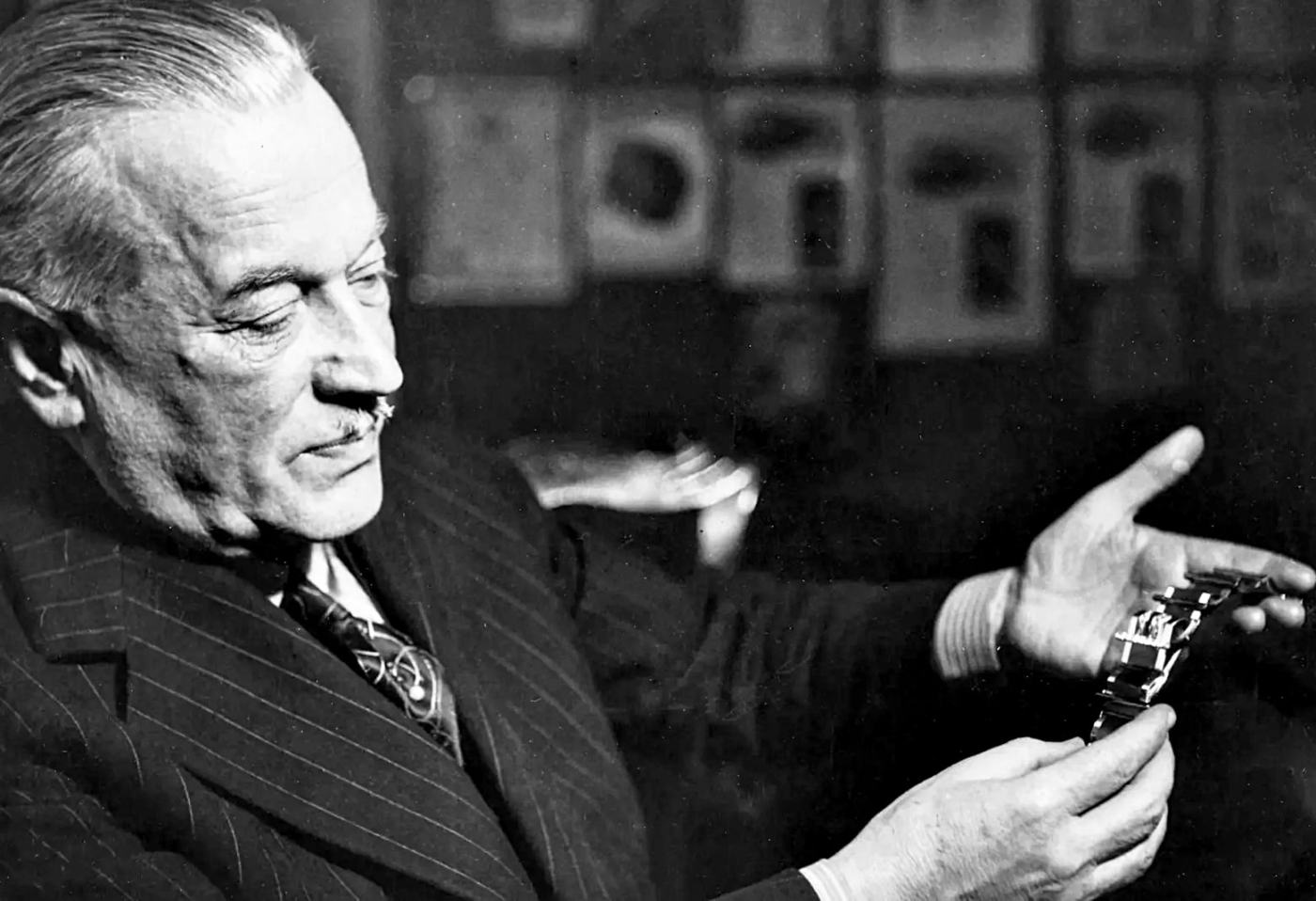
In 1944, the same year Florence died, Wilsdorf established the Hans Wilsdorf Foundation in Geneva. And in 1960, he transferred full ownership of Rolex to this foundation. Then, in 1960, he also died, and the foundation became the sole owner of one of the world's most valuable companies.
A man built one of the greatest luxury brands in history, and instead of selling it, floating it on the stock exchange, or handing it down to relatives, he gave the whole lot to a charitable trust. No family dynasty. No shareholders screaming for quarterly returns. No board of investors pushing for cost-cutting or brand extensions into perfume and handbags.
Just a foundation, sitting quietly in Geneva, owning Rolex outright.
So How Does It Actually Work?The Hans Wilsdorf Foundation is structured under Swiss law as a private foundation. It's the sole owner of both Rolex SA (the company that makes and sells the watches) and Montres Tudor SA (the sister brand that most of us know simply as Tudor).
Now, "non-profit" can be a misleading term here, and I want to be straight about that. Rolex the company absolutely makes a profit. A massive one. We're talking estimated annual revenues north of 10 billion Swiss francs. They're not running a soup kitchen. The watches cost what they cost, the waiting lists are what they are, and the margins are enormous.
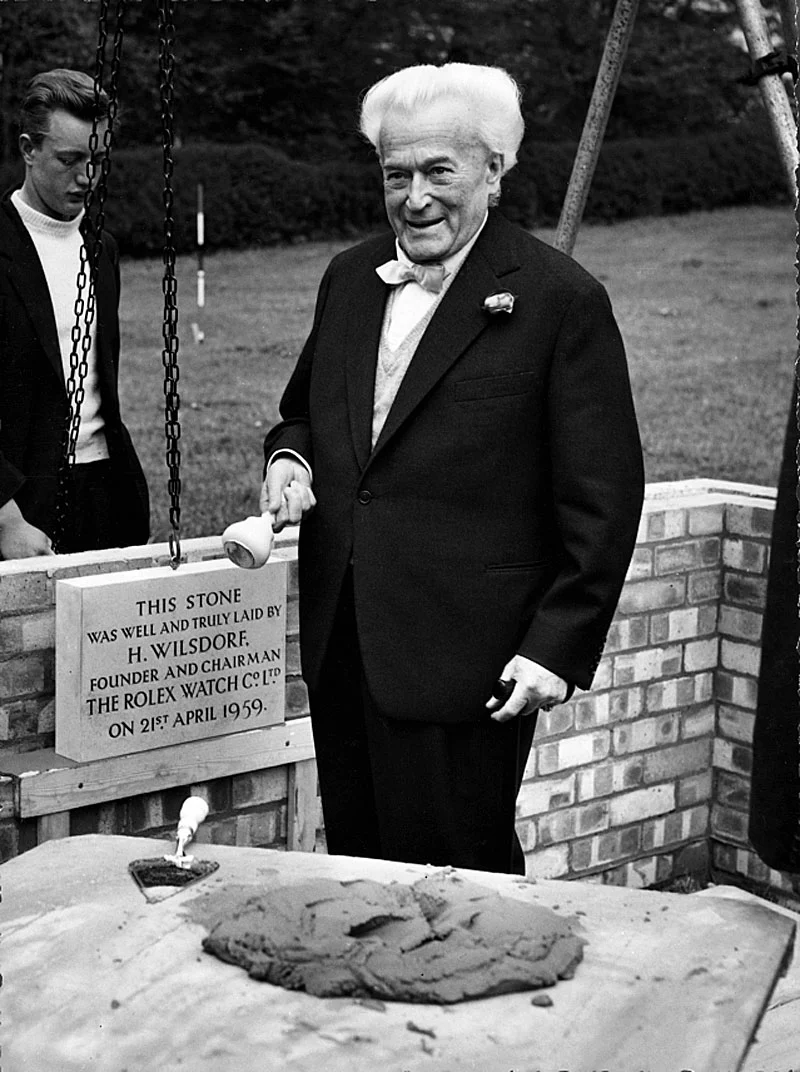 Hans Wilsdorf
The "non-profit" part refers to the foundation itself. The Hans Wilsdorf Foundation is a charitable entity, which means the profits generated by Rolex flow up to the foundation, which then distributes money to charitable causes, primarily in education, culture, and social welfare in Geneva and across Switzerland. The foundation also reinvests heavily back into Rolex to fund research, development, and manufacturing, which is one of the reasons Rolex can take such a long-term view on everything it does.
Because here's the crucial bit that most people miss: since Rolex has no external shareholders, it has absolutely zero obligation to deliver short-term financial returns to anyone. There's no quarterly earnings call. There's no activist investor demanding they cut costs or chase trends. There's no pressure to dilute the brand or rush products to market.
This is why Rolex can spend a decade developing a new movement. This is why they can manufacture their own steel, their own gold alloys, and even their own ceramic bezels. This is why they vertically integrate to a degree that would make most CEOs faint. And this is why they've maintained an almost freakish consistency in quality, design, and brand positioning for the better part of a century.
The Competitive Advantage Nobody Talks AboutWhen people in the watch industry discuss why Rolex dominates, they talk about heritage, marketing, build quality, resale value. All true. But the structural advantage of being owned by a charitable foundation almost never gets the attention it deserves.
Think about what happens when a luxury brand goes public or gets acquired by a conglomerate. Suddenly there are targets to hit. Growth expectations. Pressure to expand into new categories, new markets, new price points. You see it everywhere: fashion houses that once stood for something specific now slap their logo on everything from sneakers to hotel rooms. Watch brands that were once exclusive start pumping out volume to satisfy investor appetite.

The foundation structure means the company can be run for the long term, prioritising brand equity and product quality over short-term revenue growth. It can say no to things. It can move slowly. It can keep production deliberately below demand, which (whether you think the artificial scarcity thing is a genuine supply issue or a strategic choice) has created the most powerful secondary market in the watch world.
And it can pay its people properly. Rolex is consistently ranked as one of the best employers in Switzerland, and they invest enormous amounts in training, facilities, and working conditions. When your owner is a charity, the pressure to squeeze every last franc out of the operation simply doesn't exist in the same way.
The Secrecy FactorOf course, there's a flip side to all this, and I'd be lying if I said it was all sunshine and philanthropy. The Hans Wilsdorf Foundation operates with very little public transparency. Swiss foundation law doesn't require the same level of disclosure as, say, a publicly listed company or even a charity in the UK or Australia.
We don't really know the full extent of the foundation's charitable activities. We don't know exactly how much money flows where. And we don't know the precise mechanisms by which the foundation's board makes decisions about Rolex's direction.
Some critics argue that the foundation structure is, at least in part, a tax optimisation strategy. Swiss foundations enjoy significant tax advantages, and by routing everything through the Hans Wilsdorf Foundation, the Rolex empire avoids many of the tax obligations that would apply to a conventional corporate structure.
Whether you see that as shrewd estate planning by a man who wanted to protect his life's work, or as a convenient loophole dressed up in charitable clothing, probably depends on your general disposition toward billionaires and their financial arrangements.
But here's what I keep coming back to: whatever the tax implications, the practical effect on the product has been extraordinary. Rolex has been able to operate with a level of independence, patience, and quality obsession that is genuinely rare in the modern business world. And the foundation has, by all accounts, donated significant sums to charitable causes in Geneva and beyond over the decades, including schools, hospitals, arts organisations, and social programmes.
Why Nobody Else Has Copied This 'Business' ModelYou'd think, given how spectacularly well this model has worked for Rolex, that other luxury brands would be falling over themselves to replicate it. But they haven't. And the reasons are pretty obvious when you think about it.
First, most brand founders want to get paid.
Building a luxury empire and then handing it to a charity requires a very specific combination of wealth, childlessness, and philosophical conviction that isn't exactly common. Wilsdorf had no heirs and seemingly no interest in creating a dynasty. Most people in his position do.
Second, the foundation model only works if you're already generating massive cash flows. Rolex was already enormously successful when Wilsdorf transferred ownership. You can't really bootstrap a startup into a charity. You need decades of established profitability to sustain the structure.
And third, the timing was unique. Wilsdorf set this up in mid-20th-century Geneva, in a regulatory and legal environment specifically conducive to this kind of arrangement. The world has changed. Tax laws have changed. Corporate governance expectations have changed. Doing what Wilsdorf did today would be significantly more complicated, though not impossible.
What It Means For Watch BuyersFor the person standing in a Rolex authorised dealer, trying to get on a list for a Submariner or a GMT-Master, none of this probably matters in the moment. You just want the watch. But I think understanding the ownership structure actually deepens the appreciation for what Rolex is.
When you buy a Rolex, you're not enriching a hedge fund or padding a conglomerate's quarterly report. You're buying from a company whose profits ultimately flow to a charitable foundation. The money goes back into making better watches, paying the people who make them, and funding charitable works in Switzerland and globally.
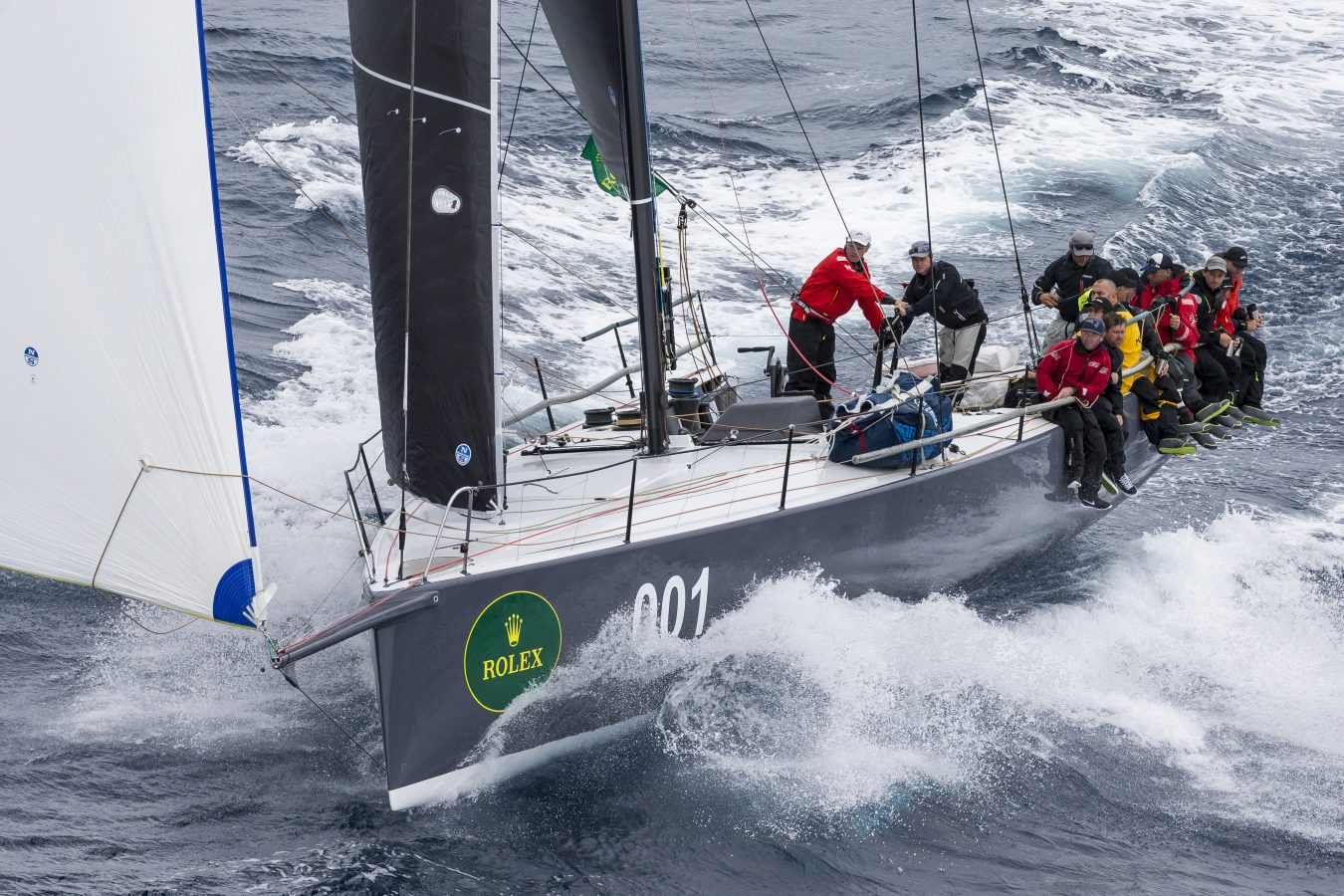 Rolex is everywhere in sport.
It's not a perfect system. It's not fully transparent. And I'm not going to pretend that buying a $15,000 Submariner watch is an act of philanthropy.
C'mon mate, let's not kid ourselves. But it is a fundamentally different ownership model from almost every other major luxury brand in the world, and it goes a long way toward explaining why Rolex feels different. Why the quality is what it is. Why the brand has remained so consistent. Why they don't chase trends or dilute their lineup.
Hans Wilsdorf built something extraordinary, and then he did something even more extraordinary: he gave it away. Not to a family, not to investors, but to a foundation with a mandate to preserve his life's work and do some good with the proceeds.
Sixty-five years after his death, Rolex is worth more than it's ever been, the watches are better than they've ever been, and the charitable foundation he created continues to operate quietly in the background, owning every single share.
It's probably the greatest succession plan in business history. And almost nobody knows much about it.
Read the full article Rolex’s Secret Business Ownership Structure Behind Every Watch Ever Sold on DMARGE. Don’t miss it!


0 Commentaires