Polestar concepts have a habit of turning into real cars. We've just spent a wet day hustling the Polestar 5 over Targa Tasmania roads, and it's about as close to the 2020 Precept concept as production reality allows. So when the Swedish brand pulls the covers off something new, it pays to look closely.
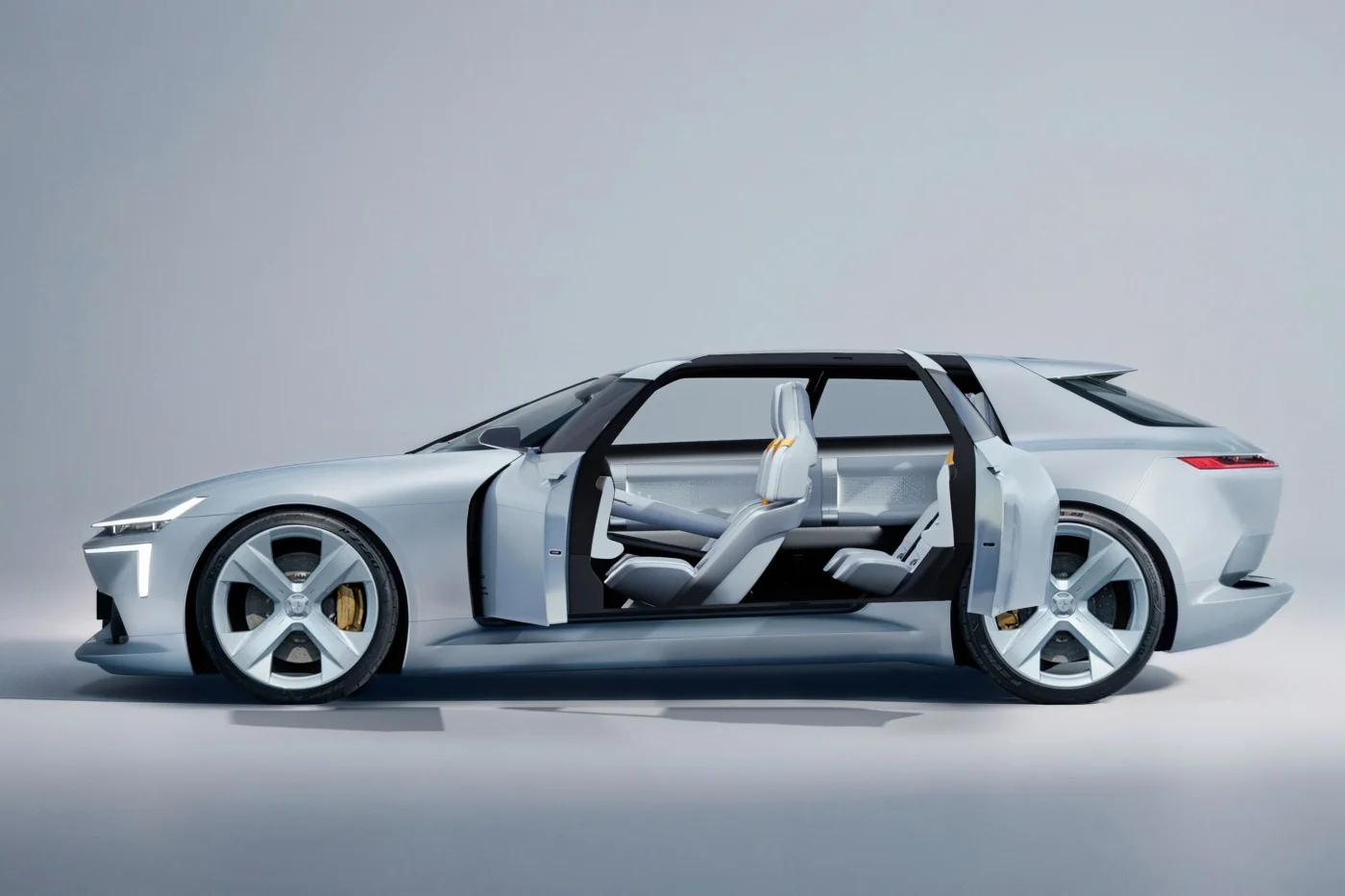
Its latest is the Formula 2030, a four-door electric shooting brake that Polestar calls the "physical manifestation" of where its design is heading for the rest of the decade.
The proportions are the first thing you notice. At 4680mm long it's a good deal shorter than the five-metre Polestar 5, but it stretches 2021mm wide and sits just 1350mm tall, which makes it lower than that car too. Polestar is calling it a "four-door sports car", and having seen how well the 5 shrinks around you on a tight mountain road, we're inclined to believe the brand knows what that means.
Up front, a new take on the brand's Dual Blade headlights gives us our first proper look at the face of the next-generation Polestar 2, due in 2027. The wraparound windscreen and single vertical wiper are a nod to the current car.
The rear is where things change more dramatically. Polestar's full-width light bar, including the one that makes the 5 look like the Millennium Falcon from behind, is on its way out. In its place is a new Single Blade tail-light that head of design Philipp Römers says will appear on both the next Polestar 2 and the upcoming Polestar 7.
Those muscular rear haunches are also a hint at the shape of the Polestar 7 compact crossover, which won't be revealed until 2028. That's the car that matters most to the brand's bank balance. As Polestar Australia boss Scott Maynard told us at the 5's Sydney launch, "The Polestar 5 makes the brand statement; the Polestar 7 will provide the volume."
The wheels are 22-inch centre-lock items styled after the ones on the limited Polestar 2 BST edition 230, with Brembo calipers in the brand's signature Swedish gold peeking through. The paint is a new finish called Nitrogen, a pearlescent white with blue and orange undertones that Polestar says shifts with natural light. It's on the wheels too, and the lower cladding gets the same colour in satin rather than the usual contrast black.
Open the opposing doors and there's no B-pillar, just a four-seat cabin that looks nothing like any Polestar you can buy right now, the 5 included.
The driver sits behind a 20-inch curved display mounted to the steering column, with a 12.2-inch centre screen set into a rising console. A sliding selector toggles between Performance, Normal and Autonomous modes, and the cabin physically rearranges itself to suit. In Autonomous, the centre screen rises out of the console while the seat and steering wheel move apart. Switch back to Performance and the screen drops flush and the wheel comes back to you.
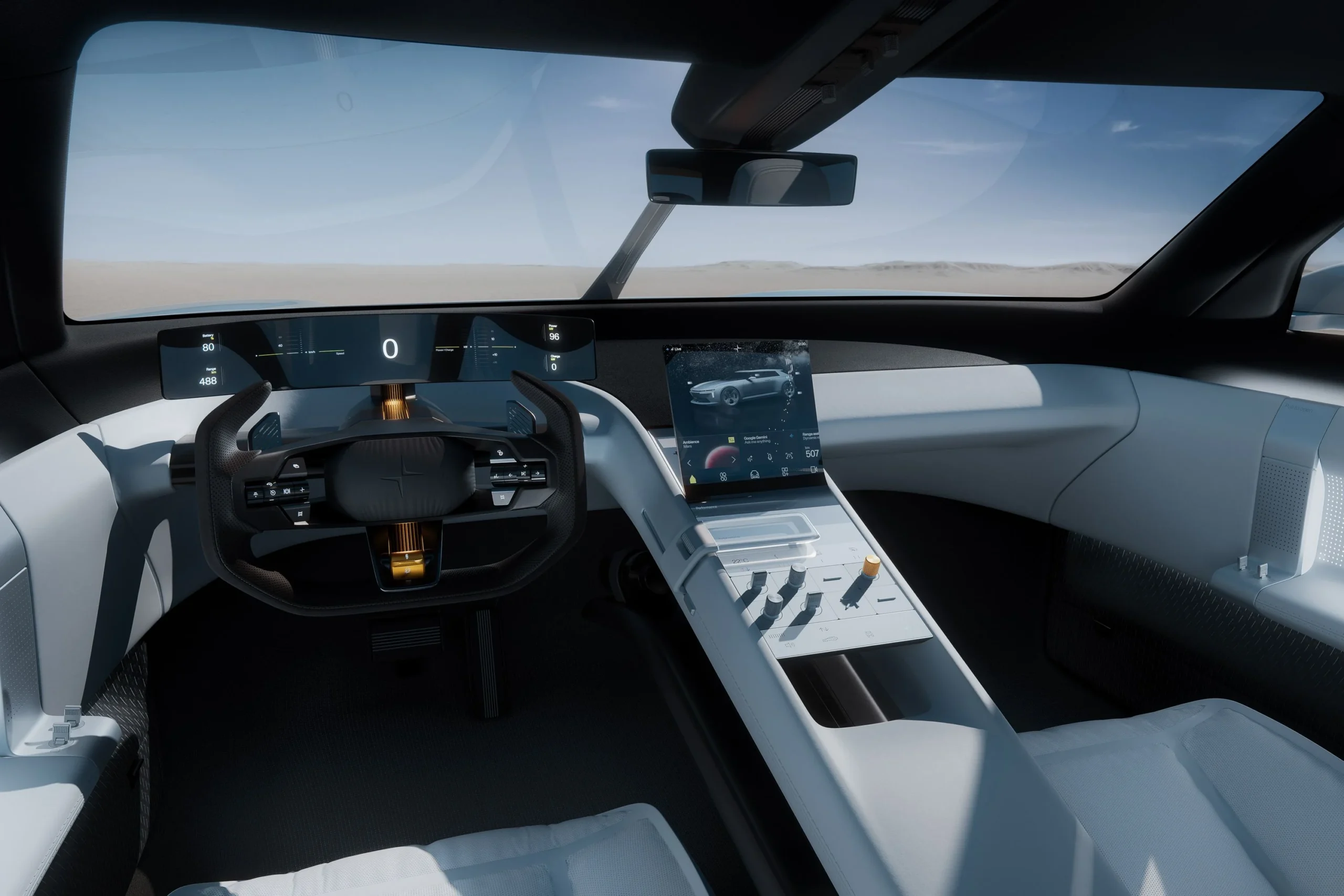
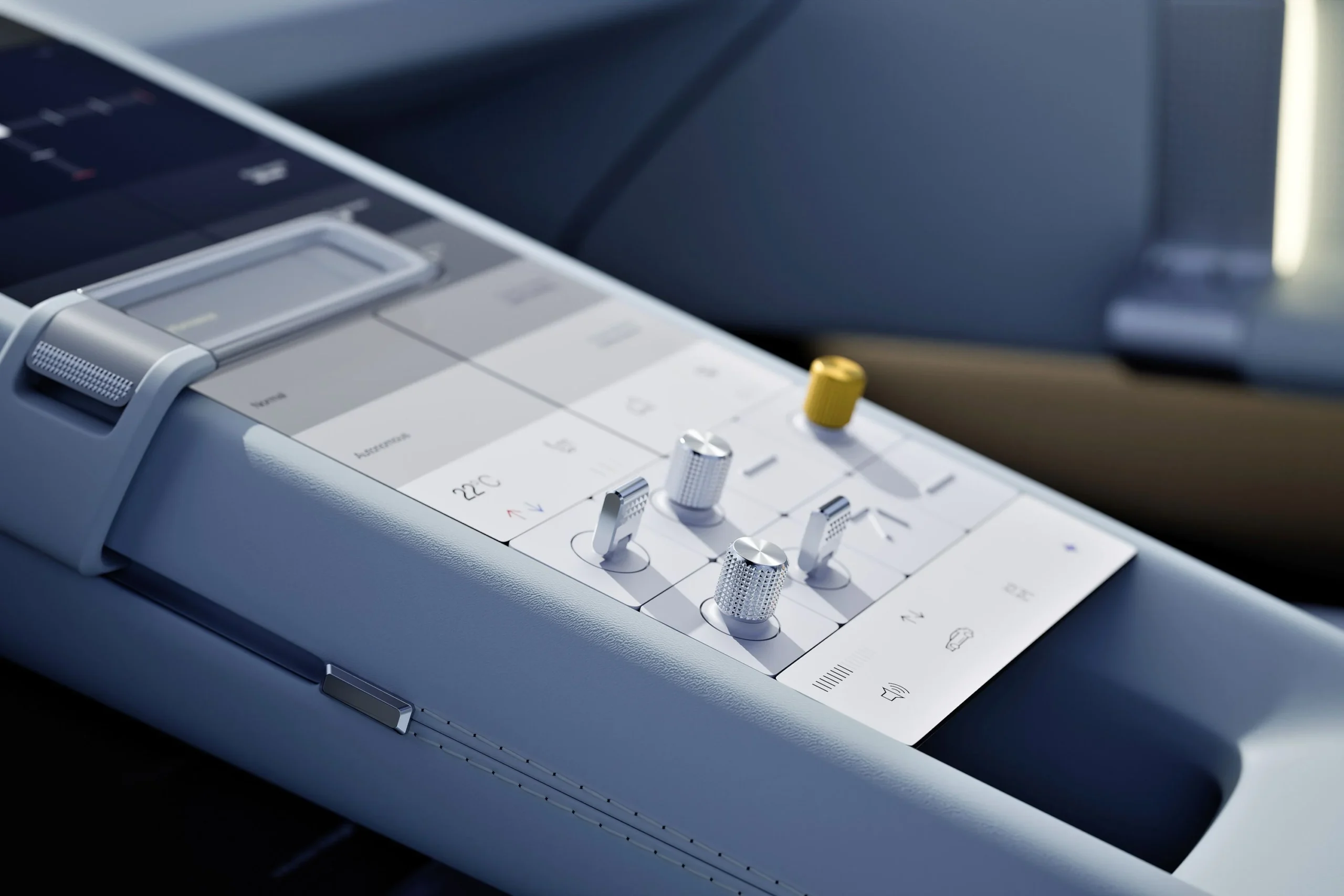
The best news is below that screen. Polestar is bringing back physical controls in the form of small mechatronic buttons, rockers and switches that can be customised both in how they look and what they do. After years of the industry burying the air-con in a touchscreen menu, it's a welcome admission that buttons were never the problem. Google Gemini is built into the software as well.
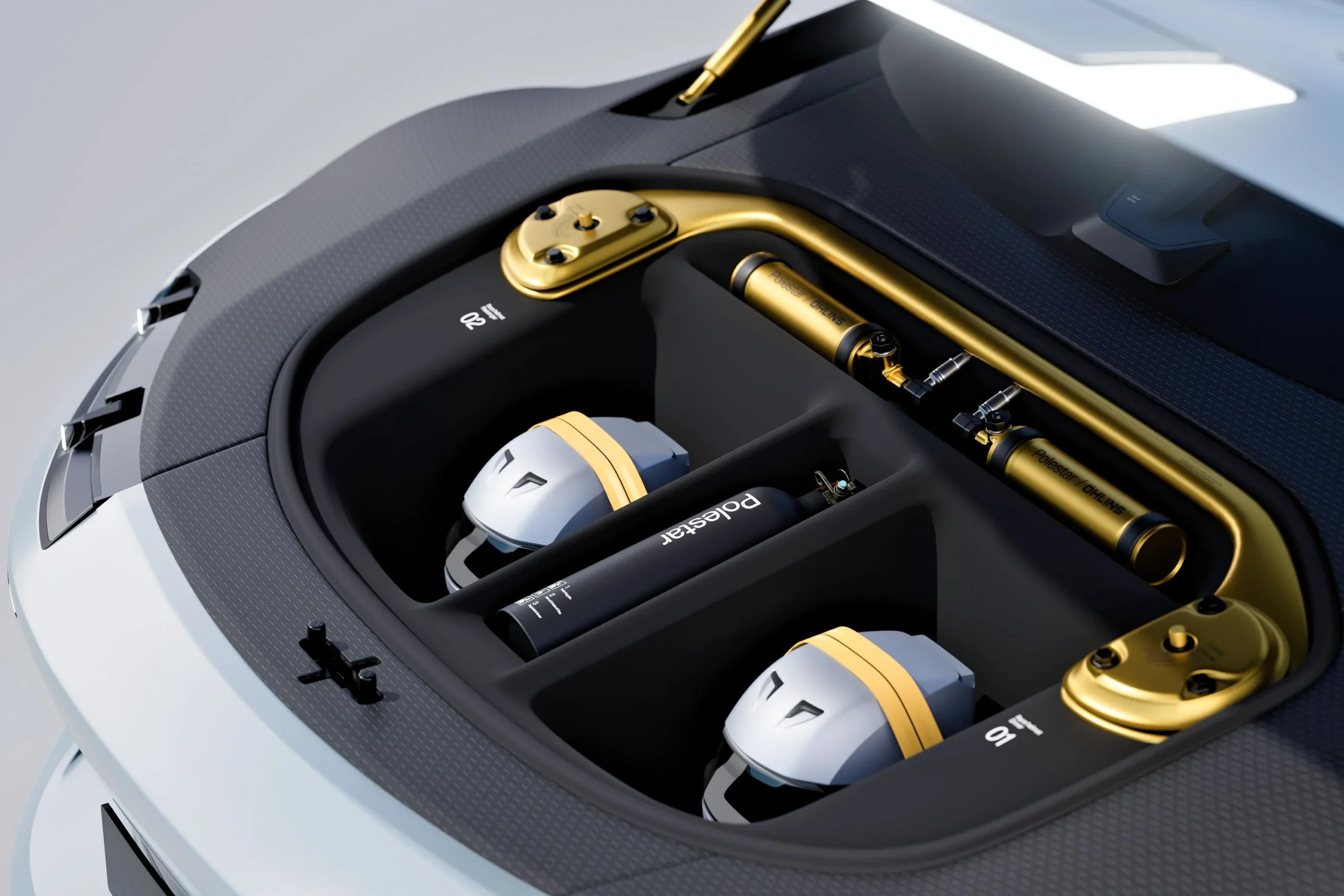
There's plenty of motorsport theatre elsewhere. The frunk has room for race helmets and a fire extinguisher, framed by a gold strut brace. Pop the rear clamshell and you'll find a transparent boot floor, exposed Öhlins dampers and bodywork made from Bcomp natural fibre composite, while the bucket seats use inflatable bolsters and seatbacks made from European flax instead of virgin plastic.
What Polestar hasn't told us is anything about what powers it. There are no motor outputs, battery figures or performance claims, which tells you this is very much a design study rather than a car waiting for a showroom.
Still, the Polestar 5 has already proven the brand can build a genuine Taycan rival for half the money. If the next Polestar 2 and Polestar 7 carry even half of this concept's attitude onto the road, the cars that actually pay the bills could finally be as interesting as the halo car. We'd take the shooting brake as is, though.
Read the full article Polestar’s Formula 2030 Concept Is A Shooting Brake With A Point To Prove on DMARGE. Don’t miss it!





0 Commentaires